
The Building Safety Act is reshaping expectations across design, construction and building management — and one component that is receiving unprecedented scrutiny: fire and smoke control dampers.
Once considered a routine part of HVAC design, dampers are now recognised as critical life-safety devices essential to compartmentation, smoke control and a building’s overall fire strategy. As competency requirements increase and accountability becomes more transparent, correct specification, installation and maintenance have never been more important.
Raising the Bar on Competency & Compliance
Under the Act, duty holders, designers and contractors must now demonstrate competence when selecting and integrating life-safety products. Fire and smoke control dampers fall firmly into this category, because a non-compliant or poorly installed damper can:
This places new pressure on project teams to ensure damper decisions are informed, appropriate and traceable.
The Golden Thread: Traceability and Verification
The Golden Thread requires clear, accurate and accessible information through a building’s lifecycle. For dampers, this includes:
Poor or incomplete documentation or incorrect installation is no longer a minor oversight — it is a compliance failure.

Why Dampers Are Under Greater Scrutiny
Dampers directly influence fire containment, smoke movement and escape route protection.
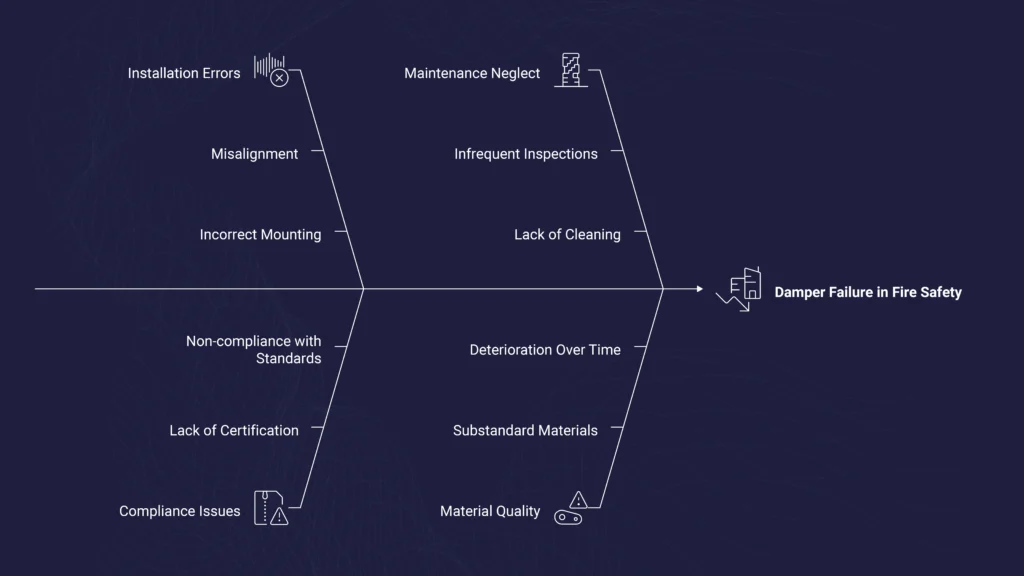
Incorrect installation — such as formation of the aperture, incorrect fixing, unsuitable fire-stopping, or missing access — prevents a certified damper from performing as tested and prevents the required maintenance during the life-time of the building, often resulting in additional remedial cost for the building owner/occupier.
Mis-specifying a fire damper, motorised or mechanical or where a smoke control damper is required (or vice versa) remains a common and high-risk error.
Accountability for Contractors & Consultants
Project teams must now evidence:
When competency or documentation is lacking, responsibility sits firmly with the project team.

How BSB Supports Compliance
BSB Engineering Services works closely with consultants, contractors and ductwork specialists to ensure:
Our products are supported by robust third-party testing, detailed technical data and engineering-led expertise.
Strengthen Your Team’s Knowledge with BSB CPDs
Our industry-led CPDs help teams navigate:
➡ Empower your team to make informed, compliant decisions.
➡ Book your CPD session online today.
