
As we move into 2026, it is worth pausing to reflect on whether the construction industry has genuinely progressed in fire safety over the past year — and whether the Building Safety Act has delivered meaningful change.
There is a view held by some that the Act simply formalises what we should always have been doing. In principle, that may be true. But our industry has not always operated with the consistency, clarity or accountability that life safety demands.
Too often, barriers — commercial pressure, fragmented responsibilities, inconsistent interpretation of standards — have prevented best practice from being applied uniformly.
What the Building Safety Act has done is expose those weaknesses. It has brought into sharp focus the areas that matter most: product performance, system design, installation integrity and, critically, accountability.
More detail is now required earlier in the design process. That is a positive shift. When design intent is clearly defined, properly documented and carried through into construction, the result should be safer buildings. The key phrase there is “carried through.” Historically, the gap between design and installation has been one of our industry’s most persistent vulnerabilities.
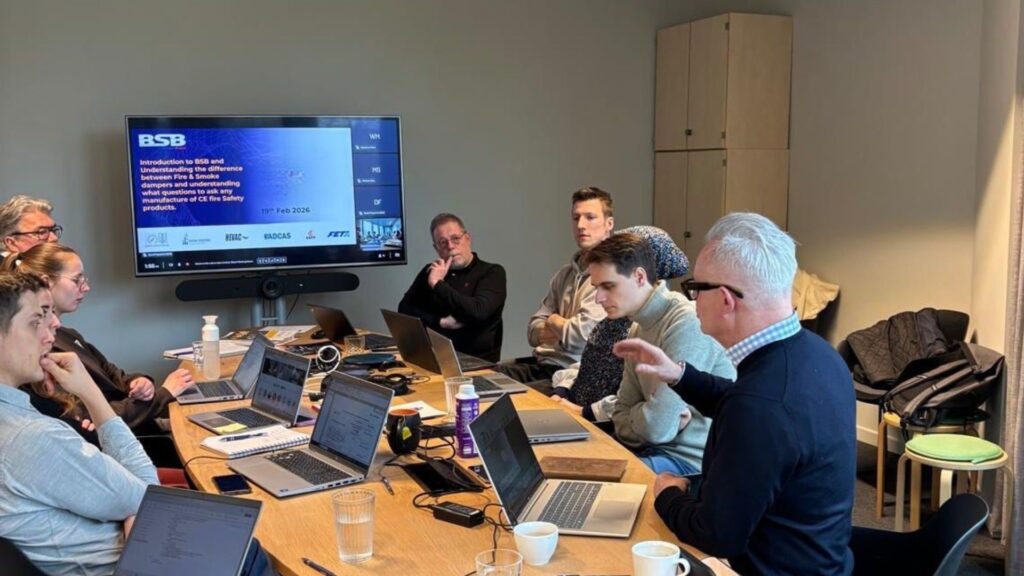
At BSB Engineering, we see the Act not simply as regulation, but as a catalyst for cultural change.
Fire and smoke control systems cannot be treated as isolated components. They are part of a life safety strategy that must remain intact from specification through to commissioning. That requires coordination — and competence — at every stage.
From a manufacturing perspective, some of the evolving standards raise legitimate engineering questions. Testing requirements must be rigorous, but they must also be technically achievable and rooted in real-world performance. Equally, ambiguity within certain areas of guidance — particularly within BS 9991 — is creating uncertainty. It is not uncommon to receive multiple interpretations of the same clause from different stakeholders. That inconsistency introduces risk, and risk in our sector is unacceptable.
This is where collaboration becomes essential.
Manufacturers, consultants, contractors and professional bodies cannot operate in silos. Clearer alignment is needed to develop shared understanding and unified guidance. More importantly, we need to invest in structured, cross-discipline training that reflects the new responsibilities introduced by the Building Safety Act.
There is still a noticeable lack of clarity around the duties of Principal Designers and Principal Contractors in relation to fire and smoke control systems. Competence cannot be assumed because someone holds a title. It must be developed, supported and continually strengthened.
For me, training must be the defining focus of 2026.
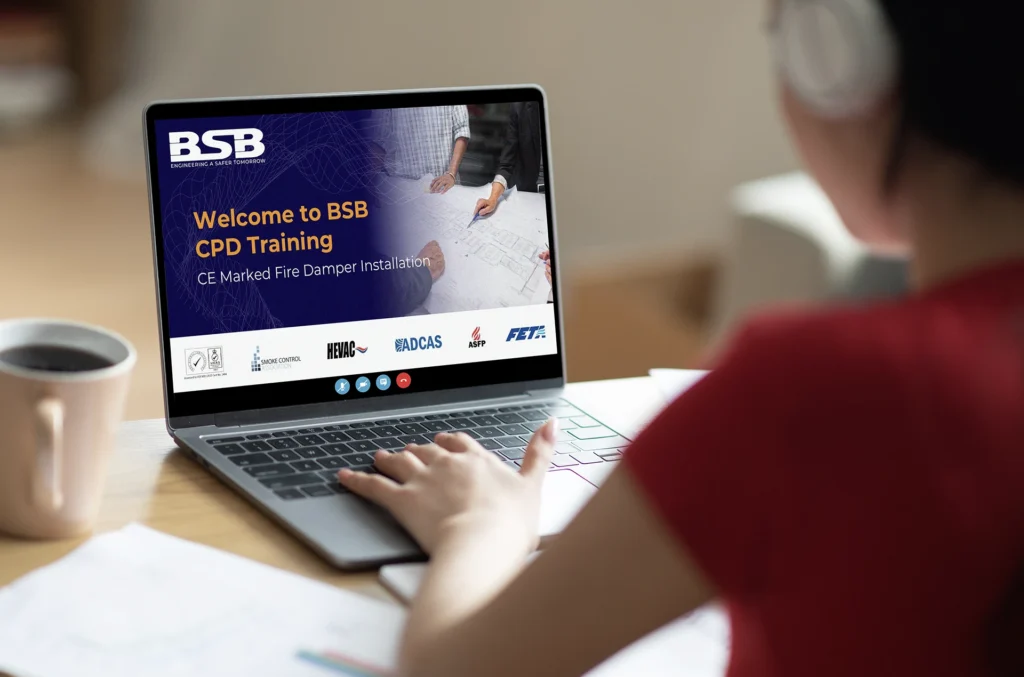
Training should not be fragmented sessions delivered in isolation but coordinated programmes that connect product performance to design responsibility, and design responsibility to installation reality. Training that ensures that everyone in the supply chain understands not just what they are doing, but why it matters.
At BSB Engineering, this belief sits at the core of how we operate. With more than 45 years of experience and as part of a structured global group of companies, we have consistently advocated for engineering-led clarity, independent testing and technical collaboration across the supply chain. We see our role not simply as a manufacturer, but as a contributor to raising standards and competence across the industry.
This is what we mean by The BSB Way.
It reflects our commitment to challenging ambiguity where it exists, designing and testing with precision, and taking responsibility for the life safety performance of the systems we deliver. It recognises that compliance is the starting point — not the end goal — and that genuine safety comes from understanding, accountability and continuous improvement.
The Building Safety Act has set the framework. The responsibility now lies with all of us to ensure it is implemented with competence, consistency and integrity.
If we are serious about safer buildings, then 2026 cannot just be another year of regulatory adjustment.
By David Fitzpatrick, Managing Director, BSB Engineering Services
David Fitzpatrick is Managing Director of BSB Engineering Services and Chairman of the CIBSE Fire Safety Special Interest Group. He authors a monthly column in CIBSE Journal, addressing evolving regulation, industry competence and the future of building safety.
