Home » Knowledge Hub
Find the technical information you need to specify, coordinate, install and maintain BSB fire dampers and smoke control products. Access product literature, BIM and NBS data, installation guidance, performance documentation and expert technical guidance.
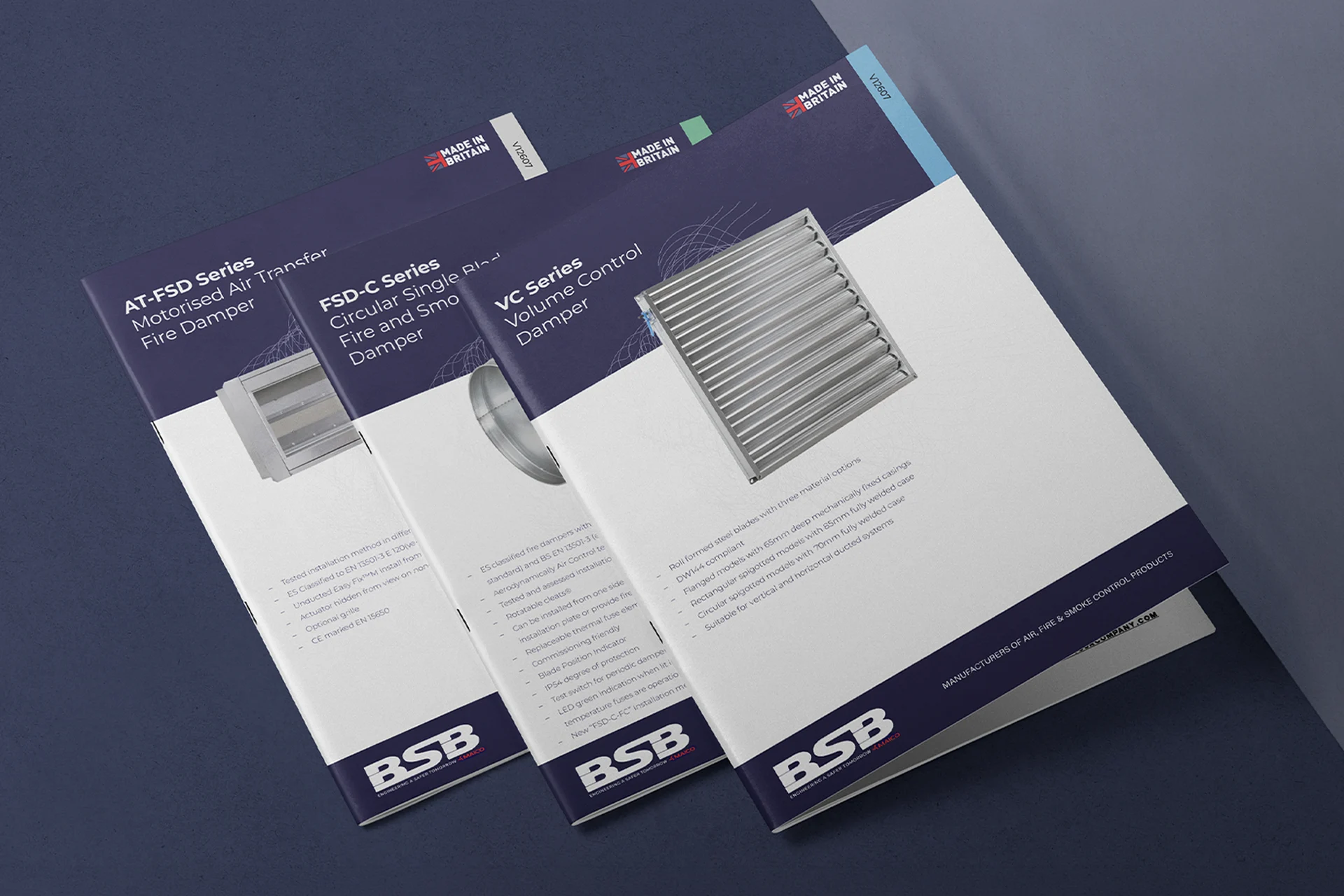

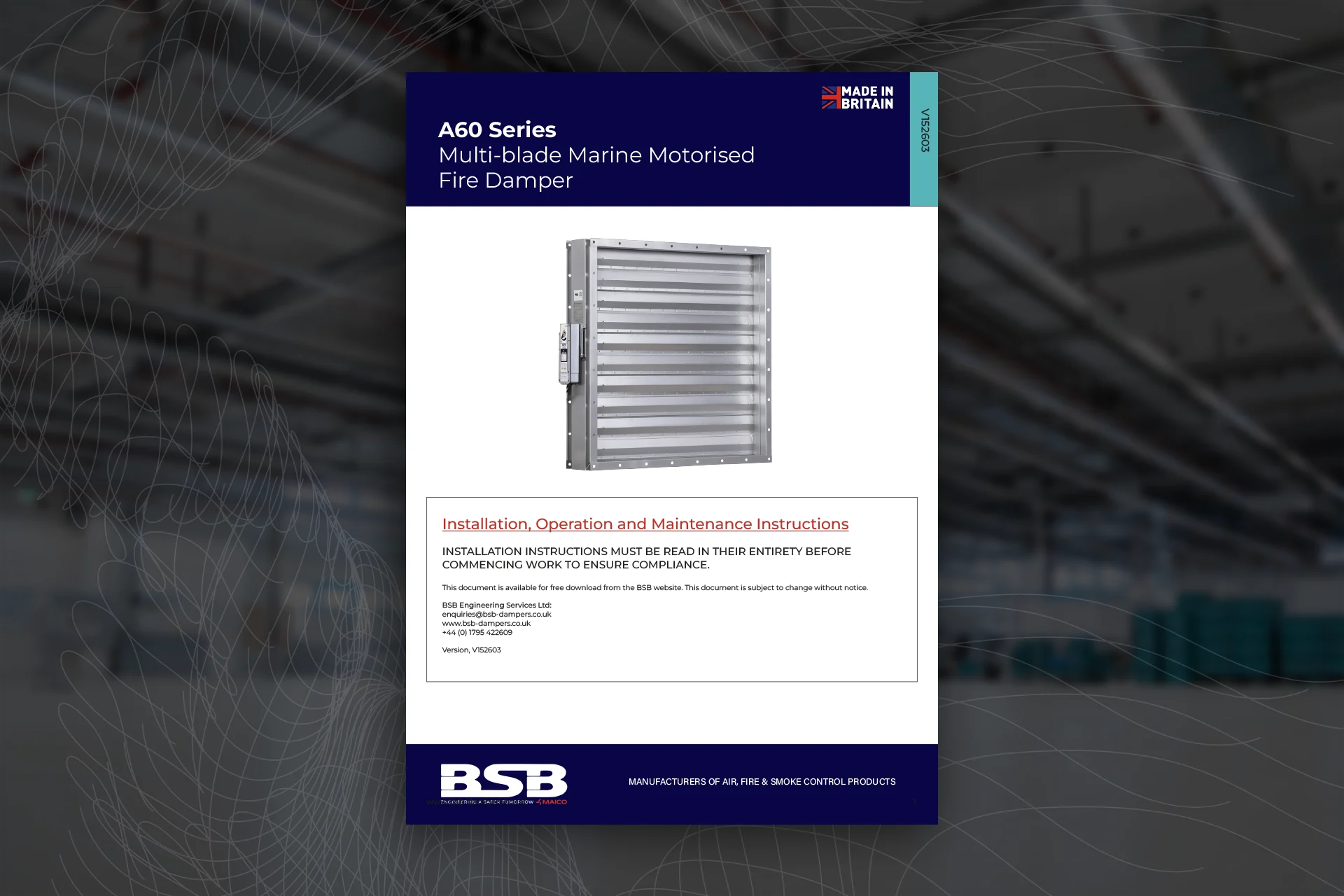

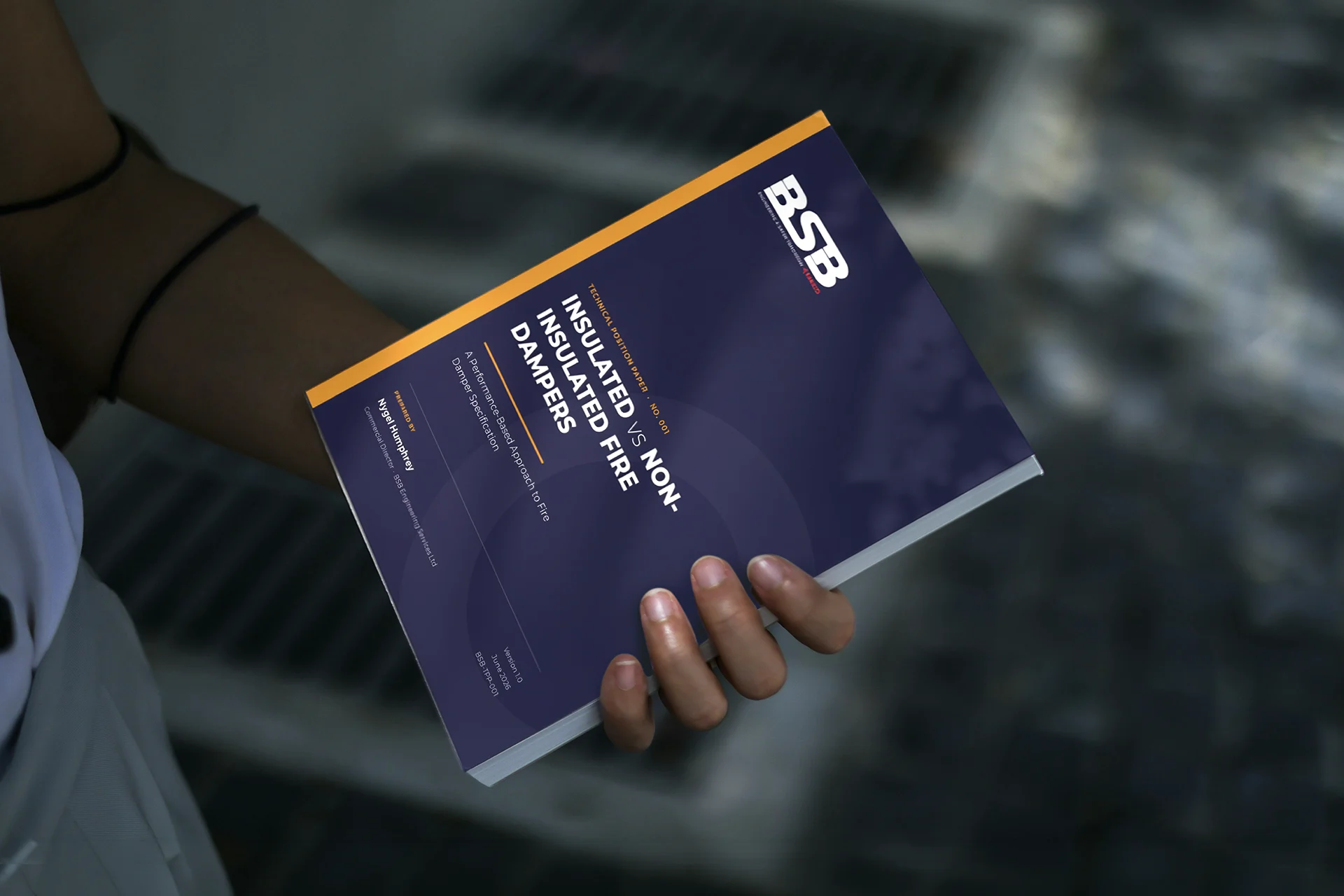


A fire damper is designed to help maintain fire compartmentation where ventilation ductwork passes through a fire-resisting wall or floor.
In the event of a fire, the damper closes to restrict the passage of fire through the ductwork penetration, helping to maintain the required fire separation between areas of the building.
Fire dampers are available in different configurations and performance classifications. The appropriate product should be selected according to the fire strategy, required performance, supporting construction and tested installation method.
Although both form part of a building’s fire safety provisions, fire dampers and smoke control dampers perform different functions.
A fire damper is used to help maintain fire compartmentation where ventilation ductwork penetrates fire-resisting construction.
A smoke control damper forms part of a smoke control system and is used to control the movement of smoke within a building. Depending on the system design, dampers may open or close to support smoke extraction, containment and the protection of escape routes.
Product selection should always reflect the requirements of the building’s fire and smoke control strategy.
Fire damper selection should begin with the requirements of the fire strategy and the intended application, rather than the product itself.
Considerations include the required fire performance and classification, supporting wall or floor construction, damper location and orientation, duct size and configuration, tested installation method, and requirements for access, inspection and maintenance.
BSB provides product documentation, BIM objects and NBS specification information to help consultants and contractors identify and specify appropriate solutions.
Where an application falls outside the information provided within the product documentation, the BSB team can provide further technical support.
Volume control dampers (VCDs) are used within ventilation and air distribution systems to regulate or balance airflow.
They allow airflow through different sections of a ductwork system to be adjusted during commissioning, helping the system achieve its intended design performance.
BSB manufactures a range of air control products for different applications and duct configurations. Product selection should consider factors including size, airflow requirements, leakage performance, operating method and the requirements of the wider ventilation system.
Fire damper classifications describe different aspects of fire performance demonstrated through testing.
E relates to integrity, S relates to smoke leakage and I relates to insulation performance. These classifications should not simply be viewed as a hierarchy where specifying more classifications automatically results in a better solution.
The appropriate classification should be determined by the fire strategy, application, supporting construction and required performance at that particular location.
BSB recommends starting with the question: what performance is required from the damper in this application? From there, the appropriate classification, product and tested installation method can be considered.
A fire damper should be selected and installed in accordance with the relevant tested and classified installation arrangement and the manufacturer’s installation instructions.
The surrounding construction, opening, orientation, fixing arrangement and other installation details can form part of the tested system and should therefore be considered during specification and installation.
Contractors and installers should always refer to the current BSB documentation for the specific product and application rather than relying on a previous installation or assuming that one installation method applies universally.
If there is uncertainty about a particular application, contact BSB’s technical team before installation.
